
Slab Leak Repair & Sealing
A warm floor, a rising water bill, or moisture that keeps returning? Find the source, choose the right repair, and address the damage before closing the floor back up.
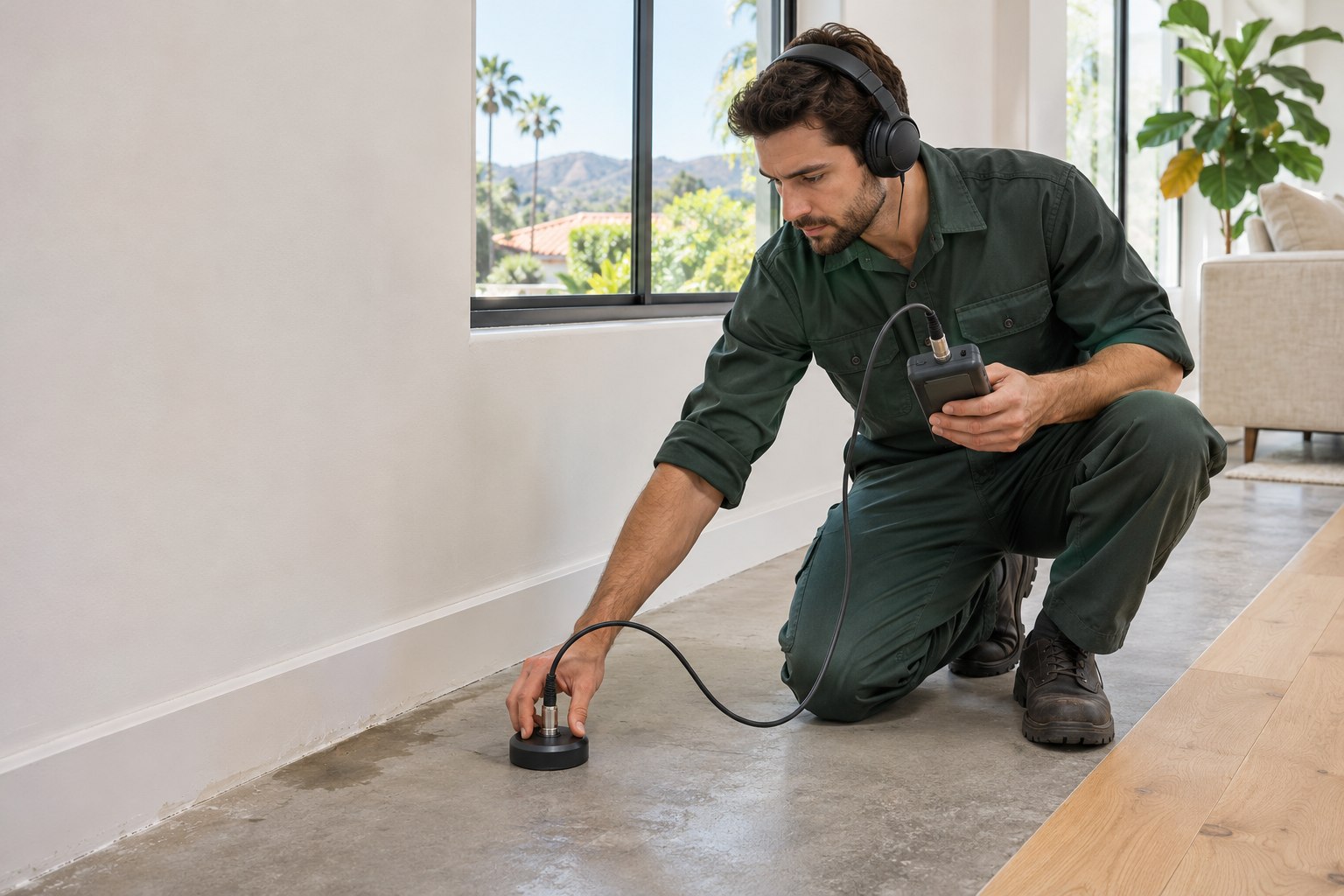
Stop the source. Protect what comes next.
A damp patch in the floor is the visible part of a problem that may be underneath it. Before choosing concrete slab leak repair, we need to establish whether the water is coming from a pipe, entering through a crack, or moving through the slab as moisture vapor.
Environmental Mold LLC provides direct service work and involves qualified specialists as the project requires. We help connect slab leak detection and repair with moisture evaluation, appropriate sealing, and the drying needed before flooring or finishes are restored. The scope identifies who performs each part of the work.
Tell us what changed, where you see moisture, and whether anyone has already located or repaired a leak. That gives us a useful starting point for your assessment.
Three moisture problems. Different repairs.
“Slab leak” can describe several different conditions. A surface coating cannot repair a broken water line, and fixing a pipe does not automatically resolve moisture already held in concrete or nearby materials.
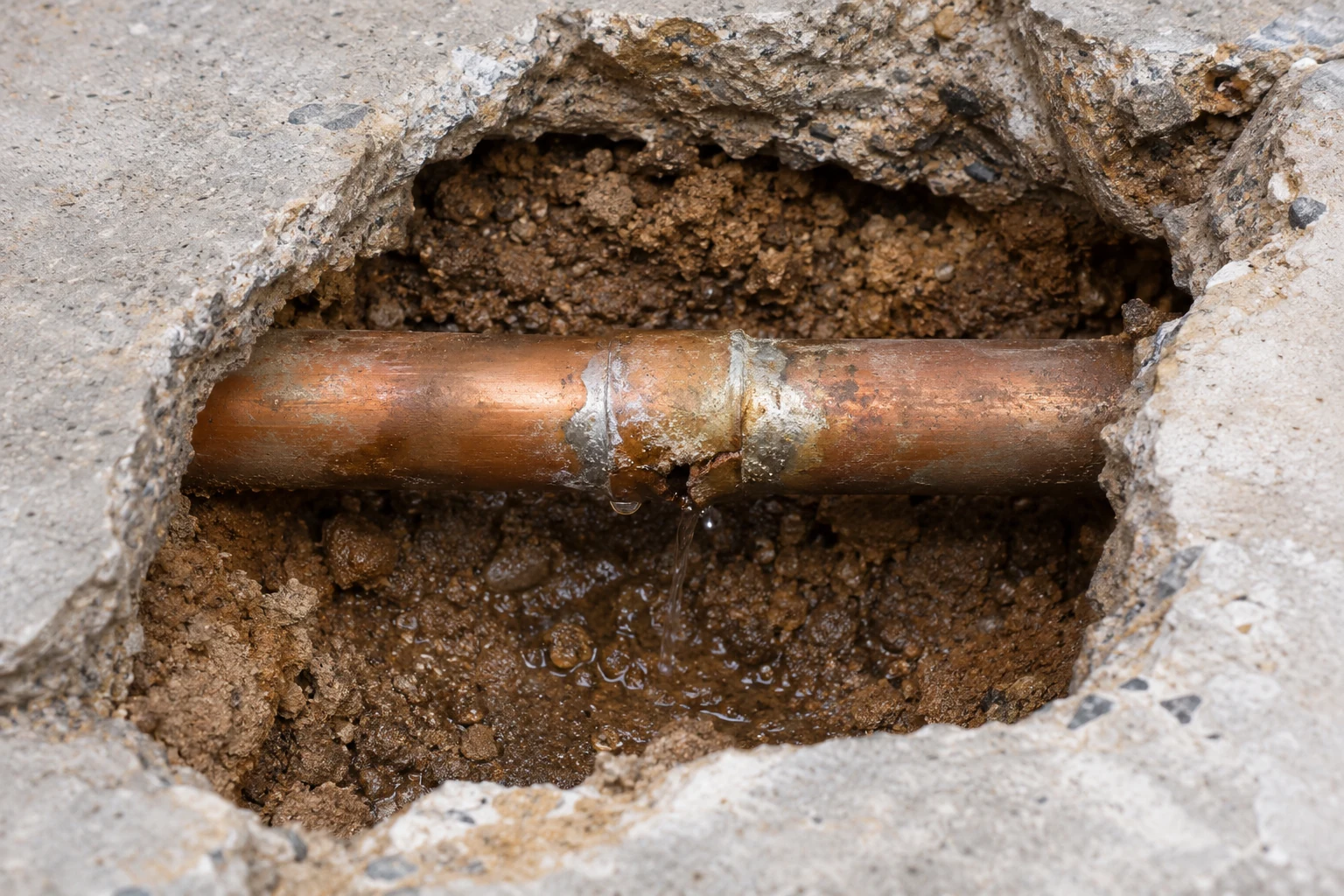
Leaking pipe
Locate and repair the plumbing source.
A floor coating cannot fix a pipe.
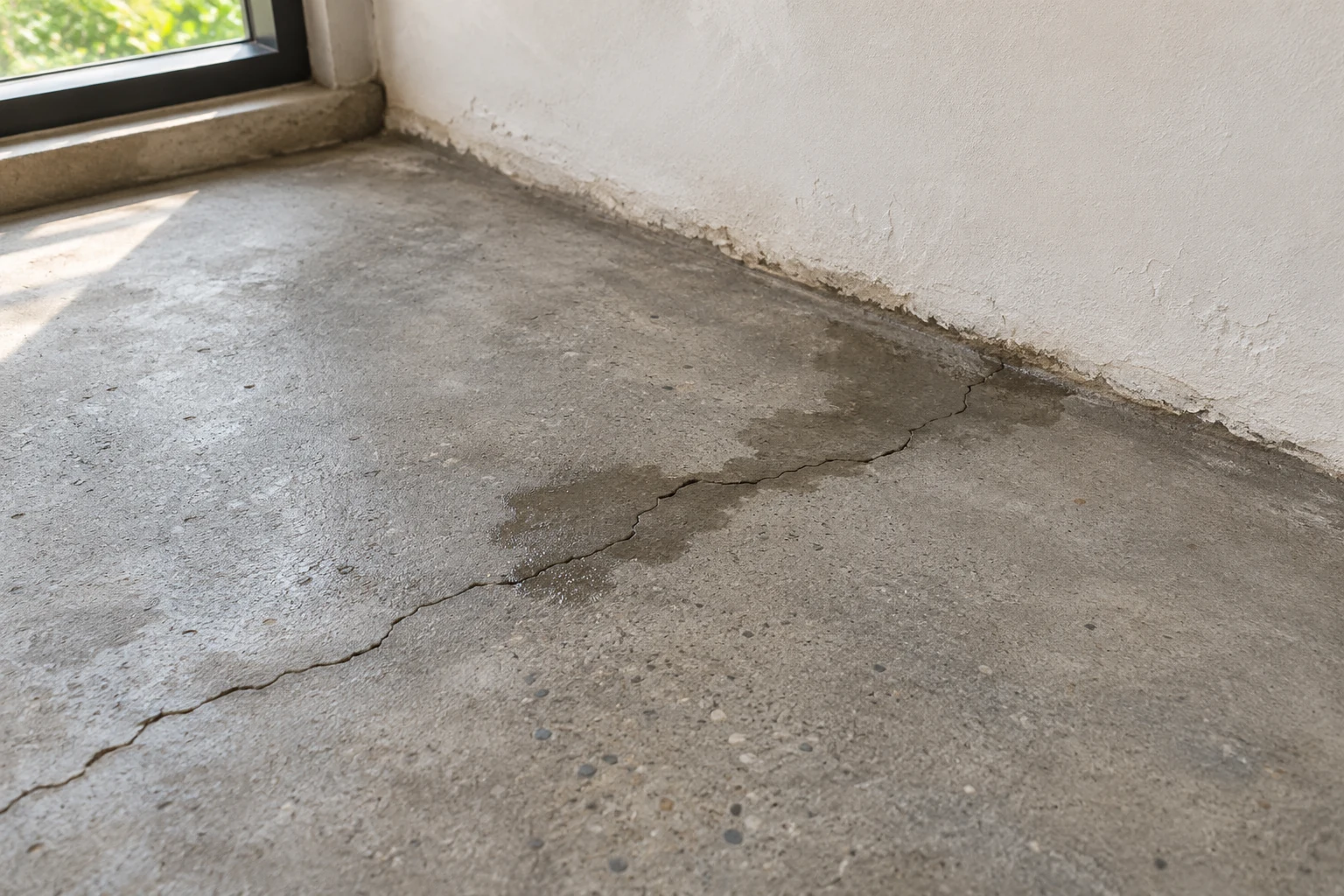
Water through a crack
Assess the crack and the water pathway.
Movement changes the repair.
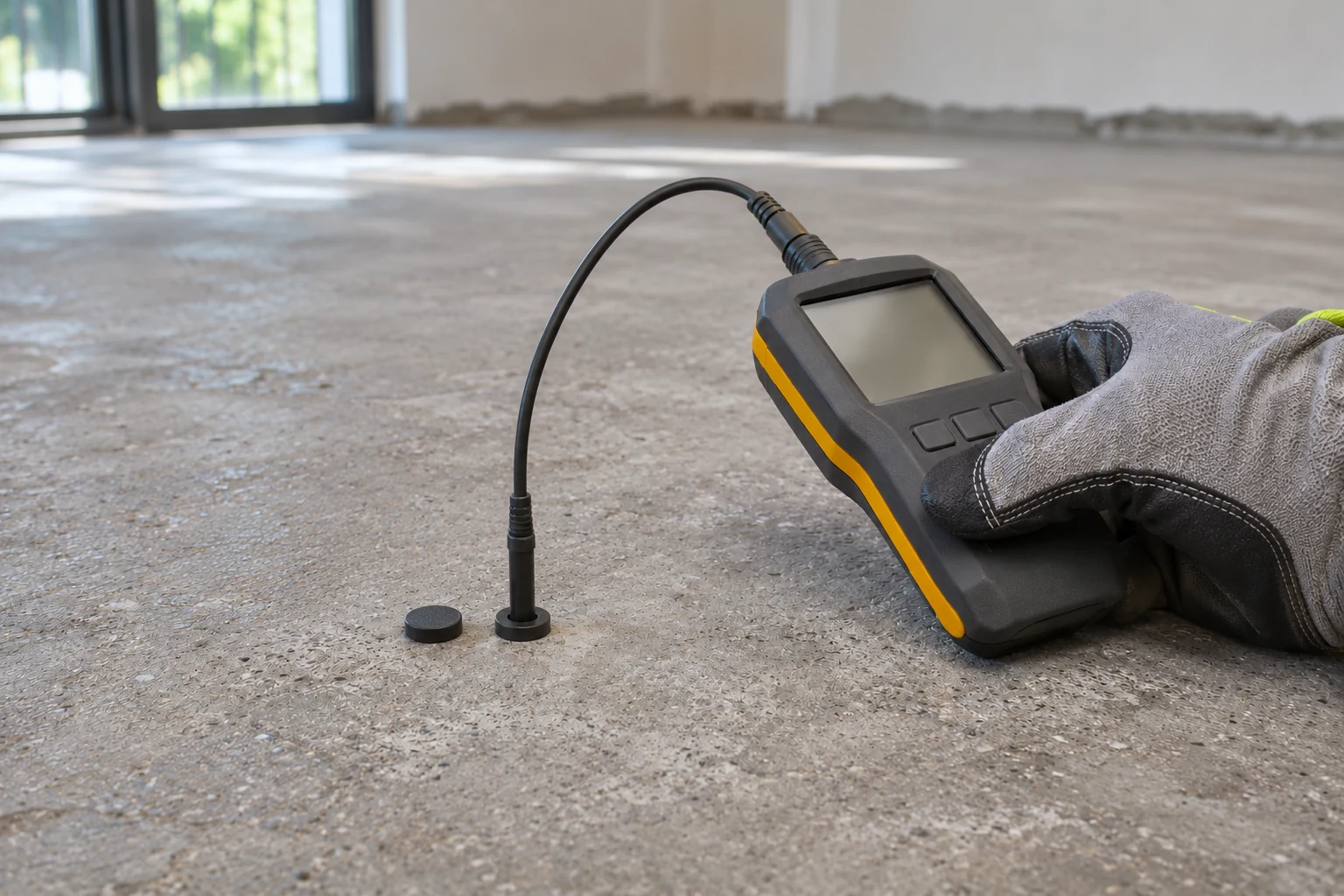
Moisture vapor
Test the slab and match the flooring system.
A barrier is not a plumbing repair.
Different sources need different repair plans. Images are AI-generated examples, not photographs of specific client projects.
A clear path from detection to verification
Locate and document the concern
We review the leak history and accessible conditions. Moisture readings and thermal patterns can guide the investigation; a plumbing specialist may use pressure testing, acoustic equipment, or other suitable methods to locate a concealed line leak. Thermal imaging alone does not confirm the exact leak location.
Compare the repair options
The plan considers pipe material, condition, access, water service, concrete and flooring construction, and any movement in the slab. We explain direct work and specialist responsibilities, proposed access, and which finishes or restoration tasks are included.
Repair, seal and control moisture
The appropriate trade addresses the confirmed water source. Crack treatment or slab leak sealing services are specified only where they address the actual pathway. Targeted access is preferred when suitable, with protection for surrounding rooms and materials.
Check the repair and the drying
Plumbing verification checks the repaired system. Separate moisture checks track affected materials. Before a floor is closed or a coating applied, the relevant installation requirements must be met; a dry-looking surface is not enough.
Repair options matched to your property
The least disruptive method is useful only if it can solve the confirmed problem reliably. We discuss the access, limitations, and follow-up for the options that fit your project.
Under-slab plumbing repair or rerouting
Under slab leak repair may involve opening a targeted area to reach a damaged pipe, replacing an affected run, or rerouting the line away from the slab. Underground pipe leak repair depends on the location and condition of the system, rather than the size of the damp patch above it.
For water leak repair under a concrete slab, ask how the leak will be verified, how any access opening will be restored, and whether permits or inspections are required. Plumbing work is assigned to an appropriately licensed specialist where required.
Trenchless options and epoxy pipe lining
Non-invasive slab leak repair and trenchless slab leak repair can reduce demolition in suitable cases. They do not mean that every job can be completed without access openings, disruption, or pipe replacement.
Epoxy pipe lining is a pipe-system method, not a coating applied to your floor. When epoxy slab leak repair or another pipe leak sealing approach is proposed, the specialist must confirm the pipe condition, preparation, service conditions, cure requirements, and product suitability. A lining must be appropriate for the actual water or drain system; it is not a universal repair for failed or collapsed piping.
Concrete crack injection and foundation crack sealing
Concrete slab crack repair addresses the concrete, not a leaking pipe beneath it. Concrete crack injection may be considered after evaluating the crack, moisture pathway, and whether the concrete is moving.
Epoxy crack injection can be appropriate for certain bonding repairs. Other injection materials may suit water-stopping needs. Material selection is specific to the conditions. Foundation crack sealing does not correct settlement or movement; structural concerns need the appropriate specialist before a slab foundation leak repair is specified.
Slab moisture mitigation and compatible barriers
After the source is controlled, testing may identify moisture conditions that need a separate floor-system solution. Slab moisture mitigation can include a compatible surface-applied system, while moisture barrier installation must suit the substrate, flooring, adhesives, and measured conditions.
Concrete slab sealing or slab leak waterproofing is not a substitute for plumbing repair or drainage correction. A concrete leak repair or water intrusion repair plan must address where the water comes from before selecting a surface treatment.
A careful approach to materials and the indoor environment
Environmental responsibility starts with stopping water loss and choosing work that solves the problem without unnecessary removal. It also means understanding what a product requires during installation—not assuming that “green” or low odor makes it harmless.
Choose suitable products and explain the limits
Product selection considers the intended use, manufacturer instructions, and safety data sheet. Where suitable, lower-emission options can reduce a source of indoor pollution. Low-VOC and low odor do not mean risk-free: uncured resins still require careful handling and controls.
Any material used inside drinking-water piping must be suitable for that use and meet applicable requirements. A concrete coating is not interchangeable with an approved pipe-lining system.
Protect occupants and contain the work
The work plan addresses dust control, ventilation, protection of nearby surfaces, and handling of removed material. We discuss access restrictions for occupants and pets, curing conditions, and when the work area can return to use.
Targeted repair can preserve existing materials where appropriate. Removed debris and unused chemicals need proper handling and disposal; they should not be washed into drains or soil.
Repairing the leak is one step. Drying is another.
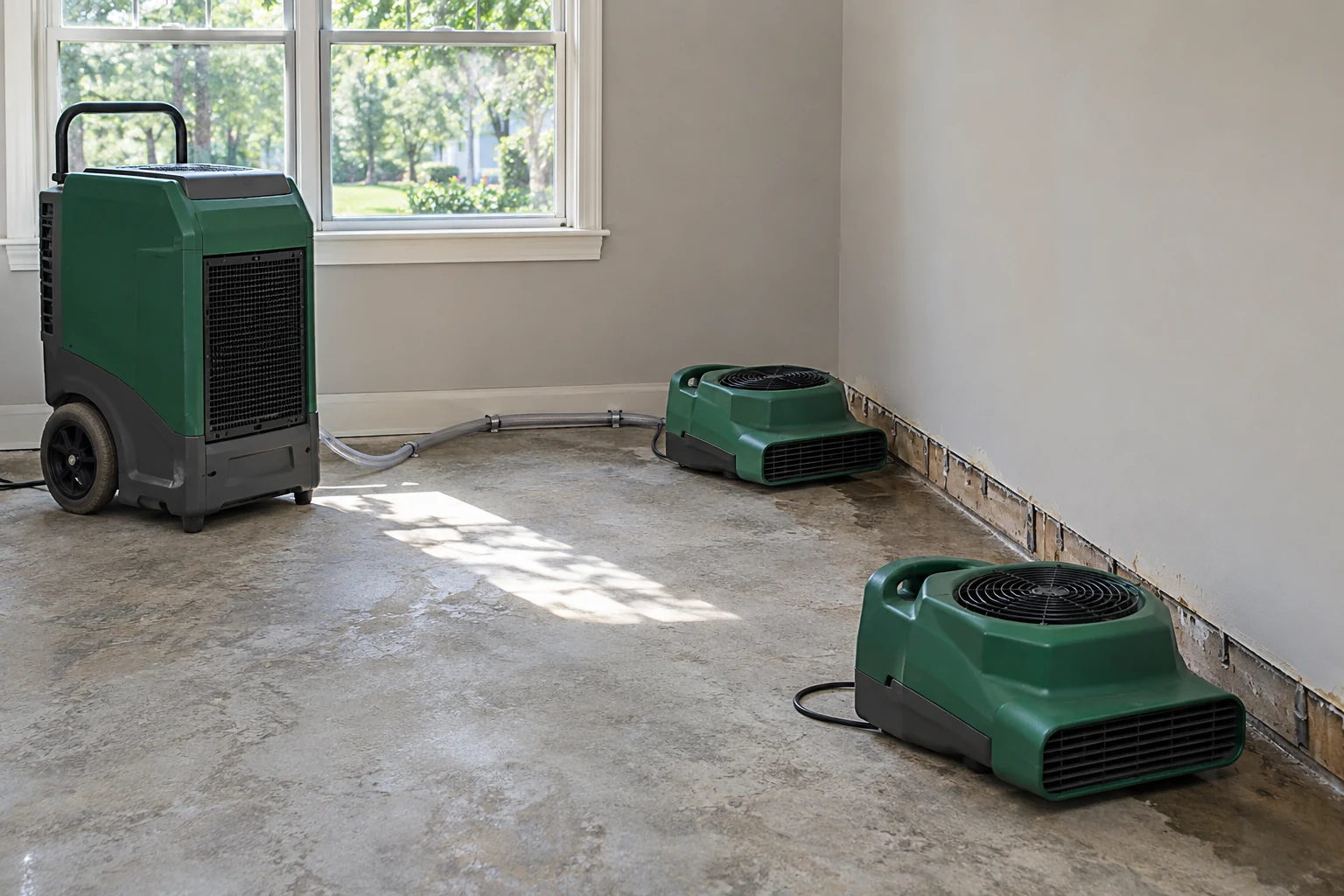
Water can remain in concrete, wall bases, floor assemblies, or cabinets after the plumbing stops leaking. Water damage dry out should follow an assessment of the materials and the water involved, with extraction, drying equipment, and removal where appropriate.
Structural drying services and subfloor drying are planned around the affected assembly. Concrete slab drying may take longer than the surrounding surfaces. We use documented moisture findings to guide decisions, rather than promising a fixed number of days.
Before floor installation, testing must match the floor-system requirements. An ordinary surface moisture reading does not replace specified concrete testing. Water damage restoration, mold cleanup, and reinstatement of flooring may be separate scopes; your proposal should say what is included.
If suspected growth or an odor remains, a mold inspection or follow-up moisture evaluation can help address those questions.
What your plan should make clear
- The source identified, the evidence, and any remaining uncertainty.
- The selected repair or sealing method and why it fits.
- Who performs the direct work and specialist tasks.
- Access, surface protection, and restoration responsibilities.
- Verification, drying checks, and product cure requirements.
What affects your quote
Leak location, pipe type and length, access, floor finishes, concrete conditions, affected materials, and testing requirements all influence the work. Permits, specialist involvement, drying equipment, and finish replacement can change the total scope.
Share your ZIP code, photos, leak history, any detection report, and previous repairs. We can discuss the next step and what needs to be assessed before a repair quote is meaningful.
Slab Leak Repair & Sealing FAQs
Can sealing the concrete stop a leaking pipe?
No. A surface sealer does not repair a damaged supply or drain line beneath the slab. The plumbing source needs the appropriate repair. Separate concrete or moisture work may be needed afterward.
Can a slab leak be repaired without breaking the floor?
Sometimes a suitable reroute or lining approach can reduce floor removal. Pipe condition, access, location, and system requirements determine the options. No-demolition repair cannot be promised before assessment.
Is epoxy pipe lining the same as epoxy crack injection?
No. Pipe lining treats the inside of a suitable piping system. Crack injection addresses a crack in concrete. The products, preparation, installation conditions, and verification are different.
Are the sealing materials environmentally safe?
Suitability depends on the product, intended use, and how it is installed. We review manufacturer instructions and safety information, discuss ventilation and access restrictions, and follow required curing conditions. Low odor or low VOC does not mean a product is harmless during application.
How long will the repair and drying take?
Access, repair method, product cure, water damage, and material moisture conditions affect the schedule. The plumbing repair and the drying can finish at different times. Floor replacement should follow the relevant installation and moisture requirements.
Does every slab crack need epoxy sealing?
No. A crack needs assessment for movement, structural significance, and water entry before a repair is chosen. Epoxy is not appropriate for every crack, and sealing alone does not correct foundation movement.
Do you offer slab leak repair near me?
Environmental Mold LLC is based in Huntington Beach. Share the property ZIP code so we can confirm service and specialist availability. Our Areas Served directory is a starting point; availability and scope are confirmed for the property.
Will insurance cover the repair?
Coverage depends on your policy, the cause of the leak, and the work involved. Ask your insurer about the plumbing repair, access, resulting damage, drying, and finish replacement separately. We do not promise coverage or a claim outcome.
Tell us what you are seeing at floor level.
Bring the clues: the damp area, a change in your water bill, an earlier repair, or a detection report. We will discuss the next assessment and the people needed for the work.
Technical references: EPA moisture-control guidance; NIOSH guidance on epoxies and resins; Sika concrete-injection system guidance. Masthead photograph is an AI-generated illustration.